In 1650 invading Cromwellian forces mounted an attack on Kilkenny castle and although it was initially successfully defended they eventually managed to take control of the city by another route.
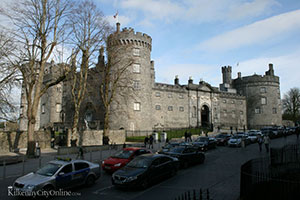
One of the most instantly recognised buildings in Ireland, Kilkenny Castle has been an important site since Strongbow constructed the first castle, probably a wooden structure, in the 12th century.
Kilkenny is 117 kilometres (73 mi) away the capital Dublin and 48 kilometres (30 mi) north from the nearest city Waterford. Wexford is 80 kilometres (50 mi) to the south-east and Limerick is 122 kilometres (76 mi) to the west.
Kilkenny have only met neighbours Carlow once in the hurling championship. That was in 1993 when Kilkenny won 5-19 to 16 points. Kilkenny have met Lancashire more times – twice(1905, 1913) .
"To understand Kilkenny's unique character one should retire from the busy streets to the lovely Castle Park and, standing within the shadow of the ancient pile, contemplate the great jumble of roof-tops, old and young, which tumble down to the quiet-flowing river beneath. Here dove-grey spires and battlemented towers proclaim a city old in Christian living and wise in human experience. One can feel the heartbeat of an ancient civilised community."
Katherine M Lanigan, Gerald Tyler, 'Kilkenny, Its Architecture & History', Appletree Press 1977
Irish legend describes Dunmore Cave, seven miles north of Kilkenny, as one of Ireland’s darkest places and the site where the monster Luchtigen 'The Lord of the Mice' was killed.
Kilkenny Castle has soared past some incredible competition to take the title of the most popular paid visitor attraction managed by the Office of Public Works (OPW) in Ireland.
AKA is a voluntary run arts festival that showcases the hard work and talent of independent artists and community groups across Kilkenny county and city.