The last witch in Ireland, reputedly Dame Alice Kyteler, was born in Kilkenny in 1280. Widowed four times, she was accused of poisoning all of her husbands. Although her former home was burned down, you can now dine at Kyteler’s Inn on the site of the house
Kilkenny is 117 kilometres (73 mi) away the capital Dublin and 48 kilometres (30 mi) north from the nearest city Waterford. Wexford is 80 kilometres (50 mi) to the south-east and Limerick is 122 kilometres (76 mi) to the west.
On learning that Bishop Kearney was buried in a tomb within St Canice’s Cathedral;
“I have to admit it was very exciting and it was great to finally prove conclusively that Barack Obama’s sixth generation grand uncle was the Bishop of Ossory who died in Kilkenny city at the Bishop’s Palace in 1813. It is now the headquarters of the Heritage Council."
Local Academic Gabriel Murray
The elevation of Kilkenny is 60 metres (200 ft) above sea level. The area of Kilkenny borough is 3.74 square kilometres (1.44 sq mi). Kilkenny is the smallest city in Ireland and although all cities in Ireland are by the coast or along a river Kilkenny is the only city that is not tidal.
Kilkenny's most one sided All-Ireland finals win was in 2008 when they beat Waterford by 23 points with a scoreline of Kilkenny 3-30 to 1-13 Waterford
"The dearest thing I know is a memory of sunny Sunday mornings in Kilkenny; the lovely line of castle, roof-top, spire and round tower against the pale blue sky, the sun revelling in the quiet colours of old stone, old walls, old tree; the tip-tap of the feet of people on the flagstones, and above all the flocking floating notes of the church bells. Sunday has a flavour of its own there, a clean, sweet, warming flavour."
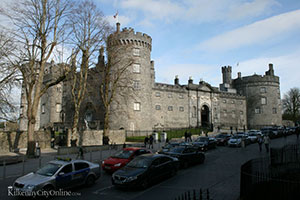
Kilkenny Castle has soared past some incredible competition to take the title of the most popular paid visitor attraction managed by the Office of Public Works (OPW) in Ireland.
AKA is a voluntary run arts festival that showcases the hard work and talent of independent artists and community groups across Kilkenny county and city.