Iconic film producer and animation innovator Walt Disney has Kilkenny roots. His great-grandfather Arundel Elias Disney emigrated from Gowran, County Kilkenny, in the 19th century.
"The dearest thing I know is a memory of sunny Sunday mornings in Kilkenny; the lovely line of castle, roof-top, spire and round tower against the pale blue sky, the sun revelling in the quiet colours of old stone, old walls, old tree; the tip-tap of the feet of people on the flagstones, and above all the flocking floating notes of the church bells. Sunday has a flavour of its own there, a clean, sweet, warming flavour."
Francis McManus, Kilkenny-born writer
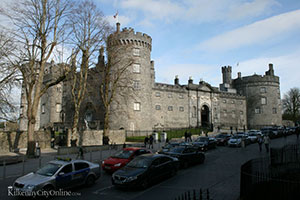
Kilkenny Castle was founded in Medieval times, but its most significant moments have been played out during more recent history. The castle was featured in Oliver Cromwell's re-conquest of Ireland in 1650; and was besieged during the Irish Civil War in 1922.Film star George Clooney’s great-great-grandfather was baptised Nicholas Clooney in Windgap church, Kilkenny, on July 23, 1829.
Kilkenny have only met neighbours Carlow once in the hurling championship. That was in 1993 when Kilkenny won 5-19 to 16 points. Kilkenny have met Lancashire more times – twice(1905, 1913) .
Kilkenny, an inland county, is bordered by counties Wexford, Carlow, Laois, Waterford, and Tipperary. Geologically speaking it is mostly limestone, with areas of black marble around Kilkenny city. The rivers Nore, Suir, and Barrow flow through it.
Kilkenny Castle has soared past some incredible competition to take the title of the most popular paid visitor attraction managed by the Office of Public Works (OPW) in Ireland.
AKA is a voluntary run arts festival that showcases the hard work and talent of independent artists and community groups across Kilkenny county and city.