The elevation of Kilkenny is 60 metres (200 ft) above sea level. The area of Kilkenny borough is 3.74 square kilometres (1.44 sq mi). Kilkenny is the smallest city in Ireland and although all cities in Ireland are by the coast or along a river Kilkenny is the only city that is not tidal.
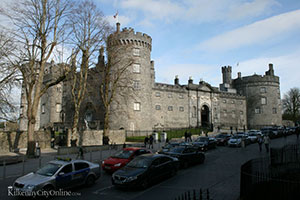
One of the most instantly recognised buildings in Ireland, Kilkenny Castle has been an important site since Strongbow constructed the first castle, probably a wooden structure, in the 12th century.
One of the most instantly recognised buildings in Ireland, Kilkenny Castle has been an important site since Strongbow constructed the first castle, probably a wooden structure, in the 12th century.
William the Earl Marshall (Strongbow's son-in-law) built the first stone castle on the site, which was completed in 1213. This was a square-shaped castle with towers at each corner; three of these original four towers survive to this day
Iconic film producer and animation innovator Walt Disney has Kilkenny roots. His great-grandfather Arundel Elias Disney emigrated from Gowran, County Kilkenny, in the 19th century.
Irish legend describes Dunmore Cave, seven miles north of Kilkenny, as one of Ireland’s darkest places and the site where the monster Luchtigen 'The Lord of the Mice' was killed.
All-time top scorer in the All-Ireland Senior Hurling Championship is TJ REID with 641 points in 82 games, scoring 30-551.
Kilkenny Castle has soared past some incredible competition to take the title of the most popular paid visitor attraction managed by the Office of Public Works (OPW) in Ireland.
AKA is a voluntary run arts festival that showcases the hard work and talent of independent artists and community groups across Kilkenny county and city.