Film star George Clooney’s great-great-grandfather was baptised Nicholas Clooney in Windgap church, Kilkenny, on July 23, 1829.Irish legend describes Dunmore Cave, seven miles north of Kilkenny, as one of Ireland’s darkest places and the site where the monster Luchtigen 'The Lord of the Mice' was killed.
Kilkenny's most one sided All-Ireland finals win was in 2008 when they beat Waterford by 23 points with a scoreline of Kilkenny 3-30 to 1-13 Waterford
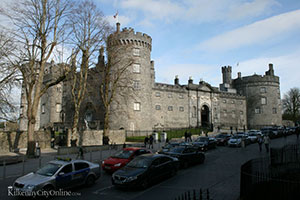
The Butler family handed Kilkenny Castle over to the people of Kilkenny in 1967 – for £50!
Kilkenny, an inland county, is bordered by counties Wexford, Carlow, Laois, Waterford, and Tipperary. Geologically speaking it is mostly limestone, with areas of black marble around Kilkenny city. The rivers Nore, Suir, and Barrow flow through it.
Kilkenny Castle was founded in Medieval times, but its most significant moments have been played out during more recent history. The castle was featured in Oliver Cromwell's re-conquest of Ireland in 1650; and was besieged during the Irish Civil War in 1922.
Kilkenny Castle has soared past some incredible competition to take the title of the most popular paid visitor attraction managed by the Office of Public Works (OPW) in Ireland.
AKA is a voluntary run arts festival that showcases the hard work and talent of independent artists and community groups across Kilkenny county and city.