The annals tell of a terrible massacre which took place in Dunmore Caves, with 1000 people killed by attacking Vikings in 928AD. Over the years there have been numerous finds of human bones, which together with finding of the Viking artifacts, seem to bear out that terrible tale.
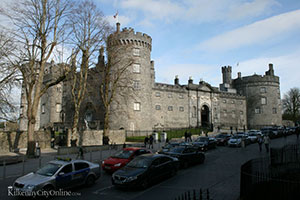
One of the most instantly recognised buildings in Ireland, Kilkenny Castle has been an important site since Strongbow constructed the first castle, probably a wooden structure, in the 12th century.
St Canice's Cathedral, also known as Kilkenny Cathedral, present building dates from the 13th century and is the second longest cathedral in Ireland. The Cathedral is named after Saint Canice, who also gave his name to the city.
The population of County Kilkenny is 95,419 according to the 2011 census ... plus an undisclosed number of Kilkenny cats.
The Butler family handed Kilkenny Castle over to the people of Kilkenny in 1967 – for £50!
Gulliver's Travels author, Jonathan Swift, attended Kilkenny College in the late 17th century, and a building at the college was named after him in 2007. Swift's fellow students included playwright William Congreve and the philosopher George Berkeley – after whom California’s Berkeley College is named.
Kilkenny Castle has soared past some incredible competition to take the title of the most popular paid visitor attraction managed by the Office of Public Works (OPW) in Ireland.
AKA is a voluntary run arts festival that showcases the hard work and talent of independent artists and community groups across Kilkenny county and city.