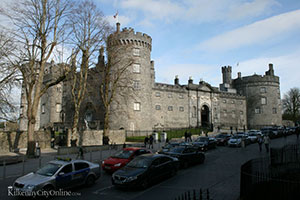
In 1922, the Butler family - namely Lord and Lady Ossory - were residents of the castle. The Irish Civil war, raged around them. Lord Ossory memorably wrote that he was woken at the "unreasonable hour of 5.30am" by his butler, who brought the news that Republican forces had seized and occupied his castle.
"To understand Kilkenny's unique character one should retire from the busy streets to the lovely Castle Park and, standing within the shadow of the ancient pile, contemplate the great jumble of roof-tops, old and young, which tumble down to the quiet-flowing river beneath. Here dove-grey spires and battlemented towers proclaim a city old in Christian living and wise in human experience. One can feel the heartbeat of an ancient civilised community."
Katherine M Lanigan, Gerald Tyler, 'Kilkenny, Its Architecture & History', Appletree Press 1977
Kilkenny's most one sided All-Ireland finals win was in 2008 when they beat Waterford by 23 points with a scoreline of Kilkenny 3-30 to 1-13 Waterford
The architect who built the White House in Washington, D.C., James Hoban, was raised on the Earl of Desart’s estate in Cuffesgrange, near Callan in Co. Kilkenny.
All-time top scorer in the All-Ireland Senior Hurling Championship is TJ REID with 641 points in 82 games, scoring 30-551.
"The dearest thing I know is a memory of sunny Sunday mornings in Kilkenny; the lovely line of castle, roof-top, spire and round tower against the pale blue sky, the sun revelling in the quiet colours of old stone, old walls, old tree; the tip-tap of the feet of people on the flagstones, and above all the flocking floating notes of the church bells. Sunday has a flavour of its own there, a clean, sweet, warming flavour."
Kilkenny Castle has soared past some incredible competition to take the title of the most popular paid visitor attraction managed by the Office of Public Works (OPW) in Ireland.
AKA is a voluntary run arts festival that showcases the hard work and talent of independent artists and community groups across Kilkenny county and city.