The "Kilkenny Cats" nickname stems from the feral felines that once inhabited the Dunmore caves in the north of the county.
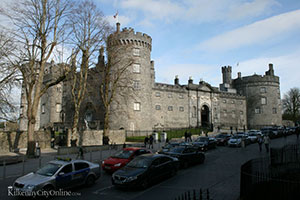
Nowadays, Kilkenny Castle is effectively three-sided. One of the four walls - and one of the great round drum towers - has disappeared over time.
Where did it go? Well, the Eastern wall and the North-Eastern tower were blown up during the 1650 Cromwellian siege of Ireland.
The Butler family handed Kilkenny Castle over to the people of Kilkenny in 1967 – for £50!
Collectively, Kilkenny people are known as 'The Cats', most specifically in the arena of hurling
The gravestone of Daniel O’Connell in Glasnevin Cemetery, Dublin is made from Kilkenny black marble, and the stone was also used in the construction of Cobh Cathedral in Cork
Kilkenny, an inland county, is bordered by counties Wexford, Carlow, Laois, Waterford, and Tipperary. Geologically speaking it is mostly limestone, with areas of black marble around Kilkenny city. The rivers Nore, Suir, and Barrow flow through it.
Kilkenny Castle has soared past some incredible competition to take the title of the most popular paid visitor attraction managed by the Office of Public Works (OPW) in Ireland.
AKA is a voluntary run arts festival that showcases the hard work and talent of independent artists and community groups across Kilkenny county and city.