The elevation of Kilkenny is 60 metres (200 ft) above sea level. The area of Kilkenny borough is 3.74 square kilometres (1.44 sq mi). Kilkenny is the smallest city in Ireland and although all cities in Ireland are by the coast or along a river Kilkenny is the only city that is not tidal.
Kilkenny, an inland county, is bordered by counties Wexford, Carlow, Laois, Waterford, and Tipperary. Geologically speaking it is mostly limestone, with areas of black marble around Kilkenny city. The rivers Nore, Suir, and Barrow flow through it.
The "Kilkenny Cats" nickname stems from the feral felines that once inhabited the Dunmore caves in the north of the county.
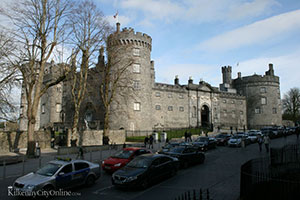
Kilkenny Castle was founded in Medieval times, but its most significant moments have been played out during more recent history. The castle was featured in Oliver Cromwell's re-conquest of Ireland in 1650; and was besieged during the Irish Civil War in 1922.
On learning that Bishop Kearney was buried in a tomb within St Canice’s Cathedral;
“I have to admit it was very exciting and it was great to finally prove conclusively that Barack Obama’s sixth generation grand uncle was the Bishop of Ossory who died in Kilkenny city at the Bishop’s Palace in 1813. It is now the headquarters of the Heritage Council."
Local Academic Gabriel Murray
Gulliver's Travels author, Jonathan Swift, attended Kilkenny College in the late 17th century, and a building at the college was named after him in 2007. Swift's fellow students included playwright William Congreve and the philosopher George Berkeley – after whom California’s Berkeley College is named.
Kilkenny Castle has soared past some incredible competition to take the title of the most popular paid visitor attraction managed by the Office of Public Works (OPW) in Ireland.
AKA is a voluntary run arts festival that showcases the hard work and talent of independent artists and community groups across Kilkenny county and city.