St Canice's Cathedral, also known as Kilkenny Cathedral, present building dates from the 13th century and is the second longest cathedral in Ireland. The Cathedral is named after Saint Canice, who also gave his name to the city.
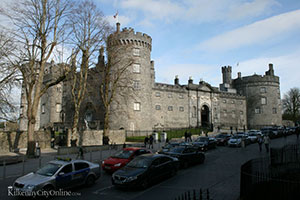
In 1922, the Butler family - namely Lord and Lady Ossory - were residents of the castle. The Irish Civil war, raged around them. Lord Ossory memorably wrote that he was woken at the "unreasonable hour of 5.30am" by his butler, who brought the news that Republican forces had seized and occupied his castle.
Kilkenny Castle was founded in Medieval times, but its most significant moments have been played out during more recent history. The castle was featured in Oliver Cromwell's re-conquest of Ireland in 1650; and was besieged during the Irish Civil War in 1922.
The Butler family handed Kilkenny Castle over to the people of Kilkenny in 1967 – for £50!
The elevation of Kilkenny is 60 metres (200 ft) above sea level. The area of Kilkenny borough is 3.74 square kilometres (1.44 sq mi). Kilkenny is the smallest city in Ireland and although all cities in Ireland are by the coast or along a river Kilkenny is the only city that is not tidal.
The gravestone of Daniel O’Connell in Glasnevin Cemetery, Dublin is made from Kilkenny black marble, and the stone was also used in the construction of Cobh Cathedral in Cork
Kilkenny Castle has soared past some incredible competition to take the title of the most popular paid visitor attraction managed by the Office of Public Works (OPW) in Ireland.
AKA is a voluntary run arts festival that showcases the hard work and talent of independent artists and community groups across Kilkenny county and city.